
- All
- Product Name
- Product Keyword
- Product Model
- Product Summary
- Product Description
- Multi Field Search
Views: 0 Author: Site Editor Publish Time: 2026-06-04 Origin: Site


Traveling should feel liberating, not exhausting. Yet, individuals experiencing limited mobility often face an incredibly tough choice. They can stay home, or they can struggle through crowded airports dragging heavy, cumbersome equipment. Traditional breakdown models demand physical bending, heavy lifting, and frustrating, tool-free assembly. These repetitive motions easily aggravate back pain or stiff joints, ultimately robbing you of your independence during a trip. An auto folding mobility scooter directly solves this massive headache. It utilizes a highly efficient, remote-controlled mechanism to compact the entire unit in mere seconds. No tools, no squatting, and absolutely no stress. This comprehensive guide breaks down the essential engineering trade-offs you must understand before making a purchase. We explore strict airline compliance realities, material differences, and objective evaluation criteria. You will learn exactly how to select the perfect remote-folding model for your upcoming travels without falling for empty marketing gimmicks.
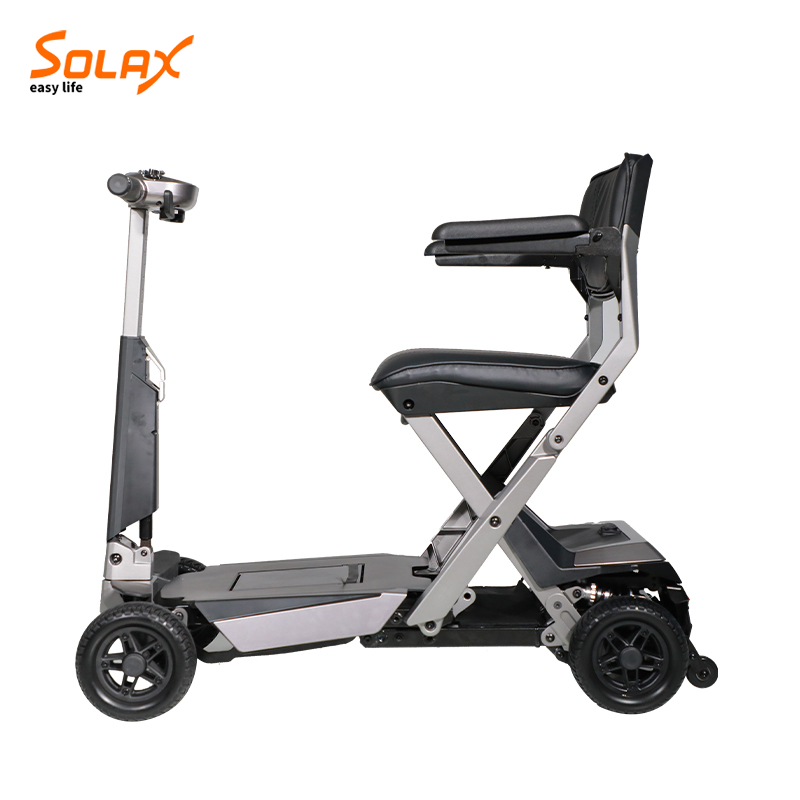
Mechanism Over Muscle: Remote-control auto-folding eliminates the physical strain of manual disassembly, but adds slight overall weight due to internal motors.
The Weight Reality: Always evaluate the "heaviest component" weight (often 37–45 lbs for auto-folders) rather than just the assembled weight.
Travel Compliance is Strict: "Airline approved" is not a universal guarantee; verifying lithium-ion battery Watt-hour (Wh) limits against FAA/TSA guidelines is mandatory.
Material Matters: Upgrading to a carbon fiber electric scooter framework can offset the weight of the folding motor, though it impacts the final price.
Safety Dependencies: True travel readiness requires anti-tip wheels, solid puncture-proof tires, and a manual override function.
Consumers seeking maximum convenience heavily favor a remote-controlled system. Pressing a single button on a key fob triggers automated actuators, unfolding the device in roughly 15 to 20 seconds. We must contrast this mechanism against traditional portable electric scooter disassembly routines. Manual models require you to physically remove the seat, unclip the heavy battery pack, and separate the main chassis into pieces. This traditional process demands physical dexterity, patience, and stable ground.
However, you must honestly address the physical trade-off. An auto-folding unit stays entirely intact as a single, cohesive piece of machinery. You never lose small components or face assembly frustration in busy cruise terminals. You do, however, have to lift the entire compacted unit at once. This single piece typically weighs between 40 and 50 pounds depending on the build. Manual models distribute the physical load. Their heaviest single piece might only weigh 27 pounds. You must objectively evaluate your unassisted lifting capacity before choosing the automated route.
Safety also requires mechanical failure redundancies. A reliable folding mobility scooter must include a manual override button or a physical release lever. A key fob battery can easily die while your device sits folded tightly in a vehicle trunk. Relying purely on the wireless fob creates a dangerous single point of failure. Always test the manual override process in your driveway before heading out on an extensive vacation.
When shopping for a lightweight mobility scooter, you will constantly encounter two very different weight metrics. "Operating Weight" includes the heavy lithium battery, while "Transport Weight" excludes it. The transport weight tells you exactly what you must physically lift into an SUV cargo space. Always look at the transport weight when planning your lifting strategy.
Pay close attention to weight capacity versus structural integrity. Most compact travel models safely support up to 250 pounds. Heavy-duty variants might stretch to reach 300 pounds. Pushing a device near its maximum weight capacity creates significant performance issues. It reduces your maximum travel range by draining the battery faster. It also severely strains the automatic folding hinges over time. Always buy a device where your body weight sits comfortably below the maximum structural limit.
Ergonomics dictate your overall ride comfort, and foldable designs often require slight physical compromises. You should aggressively check for adjustable tillers, adequate legroom, and sufficient seat padding. Ultra-compact designs frequently sacrifice advanced suspension systems to save weight. They perform beautifully on smooth airport floors, hotel lobbies, and cruise ship decks. They handle rough outdoor terrain, like cobblestones or packed dirt, quite poorly.
Stability remains paramount during any trip. You need a solid wheel base. A four-wheel configuration heavily outperforms three-wheel designs regarding side-to-side balance. Ensure the unit features anti-tip rear wheels. These small rear wheels maintain the device's center of gravity. They keep you safe on steep ADA ramps and prevent the compacted device from tipping backward when stood upright in a closet.
Frame materials dictate how easily you can travel and maneuver. Manufacturers primarily choose between two distinct structural builds when designing automated chassis systems.
Aviation-grade aluminum remains the undisputed industry standard. This material provides a highly rigid frame capable of taking heavy abuse. It naturally resists rust and corrosion, making it absolutely crucial for cruise ship vacations exposed to salty ocean air. Aluminum keeps manufacturing costs reasonable while retaining a manageable weight profile. Most traditional automated units rely heavily on aluminum tubing.
Recently, the travel market shifted toward advanced aerospace materials. A carbon fiber electric scooter offers massive structural advantages over metal. Carbon fiber drastically reduces the overall chassis weight, sometimes shaving off up to 10 pounds. It simultaneously increases structural tensile strength. Furthermore, carbon fiber actively absorbs micro-vibrations from rough pavement far better than stiff aluminum frames. It yields a notably smoother ride across imperfect surfaces.
You must perform a personal cost-to-benefit analysis before upgrading. Carbon fiber commands a significantly high price premium. This premium is absolutely justified if you travel solo and struggle with lifting. When you need to lift the device independently into a trunk, every single pound matters. If a travel companion always handles the heavy lifting, standard aluminum might perfectly suit your physical needs and budget constraints.
Material Feature | Aviation-Grade Aluminum | Carbon Fiber Framework |
|---|---|---|
Base Weight Profile | Moderate (Heavier chassis base) | Ultra-lightweight |
Vibration Absorption | Low to Moderate (Feels stiffer) | High (Smoother ride quality) |
Tensile Strength | High (Rigid and durable) | Superior (Flexible yet unbreakable) |
Market Price Point | Budget-friendly to Mid-range | Premium / High-end pricing |
"Airline approved" is an overused marketing buzzword that catches many travelers off guard. True flight compliance relies entirely on your unit's battery capacity, not the frame size.
The FAA and TSA mandate strict global rules for lithium-ion batteries inside aircraft. Standard airline travel allows batteries rated strictly under 300 Watt-hours (Wh). Alternatively, regulations permit you to carry two spare batteries under 160 Wh each. You must physically verify your battery's specific Watt-hour rating before booking any flight. Print the manufacturer specification sheet and keep it handy to show cautious gate agents.
Understanding realistic boarding workflows reduces travel anxiety. Here is what actually happens at a modern airport:
You receive a gate-check tag at the main counter and ride the device directly through TSA security down to your departure gate.
When boarding begins, you ride down the jet bridge. You then press your remote to fold the device into its compact shape.
You must remove the lithium battery from the chassis. You physically carry this battery inside the passenger cabin.
Airline baggage personnel carry the folded frame down the stairs and securely stow it in the cargo hold.
Cruise ship cabins present entirely different spatial challenges. Standard interior cabins are notoriously narrow. Storing an entire expanded mobility device inside your room is frequently impractical. You must evaluate models featuring off-board charging capabilities. This critical function allows you to remove the battery block entirely. You can plug the small battery into a wall outlet inside your cabin while parking the folded frame securely in designated hallway alcoves or storage lockers.
Convenience requires consistent, proactive upkeep. Automated joints act as massive magnets for environmental debris. Dust, beach sand, and dirt easily lodge inside the exposed folding tracks. You must regularly clear these tracks using compressed air or a dry, soft brush. Ignoring this built-up debris increases friction along the hinges. Excess friction forces the small folding motor to work harder, eventually causing it to overheat and burn out prematurely.
Battery degradation happens naturally over time, but you can aggressively slow this process down. Lithium batteries strongly hate sitting completely empty. Provide a baseline standard of care to protect your investment. Always plug the battery in immediately after returning from a long day out. If you store the device inside a garage during harsh winter months, provide a mandatory maintenance charge every two to three weeks. This basic habit prevents total cell depletion and extends the battery's lifespan by several years.
Tire selection drastically impacts your vacation experience and maintenance routine. Solid, puncture-proof tires are vastly preferred for travel over pneumatic (air-filled) options. Solid tires undeniably deliver a slightly stiffer ride quality. They transfer more ground bumps directly up through the seat post. However, they guarantee zero risk of flat tires. You never want to spend a precious vacation day hunting for a local repair shop to patch a punctured rubber tube.
Hardware Component | Recommended Inspection Frequency | Action Required |
|---|---|---|
Lithium Battery | After every use / Every 2-3 weeks idle | Recharge fully; strictly avoid total depletion. Do not store in hot car trunks. |
Automated Folding Hinges | Monthly (or immediately after outdoor park use) | Clear debris with compressed air. Ensure tracks remain completely unblocked. |
Solid Tires | Every 3 months | Check for uneven tread wear, flat spots, or deep structural cracks. |
Finalizing your choice requires honest self-assessment rather than impulsive, emotion-driven buying. Build your shortlist based on three definitive pillars. First, verify your unassisted lifting capacity. Can you or your travel partner comfortably lift 45 pounds into a high SUV trunk without straining your back? Second, evaluate your primary travel environments. Smooth airport terminals, shopping malls, and cruise ships heavily favor ultra-compact designs. Rough outdoor parks demand heavier models featuring robust suspension. Third, determine your exact budget for weight-saving materials like carbon fiber.
Take specific action before swiping your credit card. Verify your preferred airline's exact baggage dimensions for gate-checked mobility devices, as some regional carriers enforce surprisingly rigid size restrictions. Read the manufacturer's warranty carefully. Confirm exact coverage terms regarding the automated folding motor. A standard frame warranty rarely covers the delicate electronic folding mechanics. Taking these careful steps ensures your new travel companion seamlessly enhances your independence for years to come.
A: Yes. Reliable models always include a manual override switch or a physical button located directly on the main chassis. You can bypass the key fob entirely. This fail-safe mechanism ensures you never get stranded if the remote battery dies or the electronic folding motor experiences a temporary glitch.
A: Not automatically. While airlines happily gate-check the folded frame, the lithium-ion battery determines compliance. Your battery must fall below strict Watt-hour (Wh) limits mandated by the FAA and TSA (typically under 300 Wh). You must physically remove this battery and carry it inside the passenger cabin.
A: Most compact travel models offer an objective average range of 10 to 13 miles per charge. This provides ample distance for theme parks or all-day cruise ship excursions. However, maximum range fluctuates based on rider weight, frequent incline navigation, and external temperatures. Heavy loads deplete batteries much faster.
A: They perform poorly on rough surfaces. Ultra-compact travel designs feature low ground clearance and solid, puncture-proof tires. They lack the thick tread and deep suspension required for off-roading. Keep them on paved pathways, indoor flooring, and ADA-compliant ramps for optimal safety and ride comfort.


