
- All
- Product Name
- Product Keyword
- Product Model
- Product Summary
- Product Description
- Multi Field Search
Views: 0 Author: Site Editor Publish Time: 2026-06-01 Origin: Site


Heavy, cumbersome mobility devices often restrict the very independence they are meant to provide. For adults and seniors managing limited mobility, lifting a 60-pound frame into a car trunk simply is not viable. Conditions like arthritis or chronic fatigue make traditional scooters an exhausting burden. The recent shift toward carbon fiber has completely disrupted this market. Manufacturers now offer sub-35-pound frames engineered specifically for daily travel. However, buyers must remain vigilant because not all carbon fiber is engineered equally. A massive gap exists between aerospace-grade materials and cheap, unregulated clones. This disparity directly impacts user safety, load-bearing capacity, and overall reliability. We built this guide to help you navigate these complex choices. Our objective is to provide a transparent, evidence-based framework for evaluating modern mobility options. You will learn how to separate legitimate engineering from deceptive marketing, ensuring your next scooter truly enhances your freedom.
True Portability: Premium carbon fiber frames can weigh as little as 28–35 lbs (excluding batteries) and can be towed like rolling luggage.
Beware of Clones: Low-cost replicas often suffer from structural fatigue, where steel hardware cracks unreinforced carbon fiber under heavy loads (200+ lbs).
Travel Compliance: An airline-approved lithium-ion battery (typically under specific Ah limits) is a mandatory feature for a true travel scooter.
Safety Over Gimmicks: Electromagnetic brakes, reverse safety alerts, and ADA-compliant clearance are more critical than aggressive top speeds.
Standard aluminum scooters often demand mechanical hoists for vehicle transport. Alternatively, they require a dedicated caregiver to break down and lift heavy metal parts. This severely limits spontaneous travel. You cannot just grab your scooter and go to the store or a local park. Aluminum frames simply carry too much dense mass for easy single-person handling.
Carbon fiber changes this dynamic entirely. Material science proves carbon fiber offers an exceptionally high strength-to-weight ratio. Aerospace-grade carbon fiber remains completely impervious to rust. It also absorbs minor road vibrations far better than rigid metals. You enjoy a smoother ride over rough pavement without carrying unnecessary bulk.
However, you must navigate the marketing reality of scooter weight. Manufacturers frequently advertise the "without battery" weight in large font. They boast about hitting 27.5 lbs or 35 lbs. You must calculate the true operational weight. Adding an airline-compliant lithium battery introduces an additional 3 to 5 pounds. Keep this reality in mind when assessing if you can lift the lightweight mobility scooter independently. Removable seats also add temporary weight you must manage during loading.
Beyond pure weight savings, carbon fiber delivers a strong eco-forward return on investment. The material entirely eliminates corrosion risks. This translates to a significantly longer functional lifecycle. You might pay a higher upfront cost, but the extended lifespan offers better long-term value. You replace parts less frequently, reducing environmental waste over time.
Comparison Metric | Traditional Aluminum | Premium Carbon Fiber |
|---|---|---|
Average Frame Weight | 45 – 65+ lbs | 28 – 35 lbs |
Corrosion Resistance | Moderate (susceptible to scratches) | Excellent (impervious to rust) |
Vibration Absorption | Poor (rigid energy transfer) | High (natural dampening) |
Transportability | Often requires mechanical hoists | Easily towed like rolling luggage |
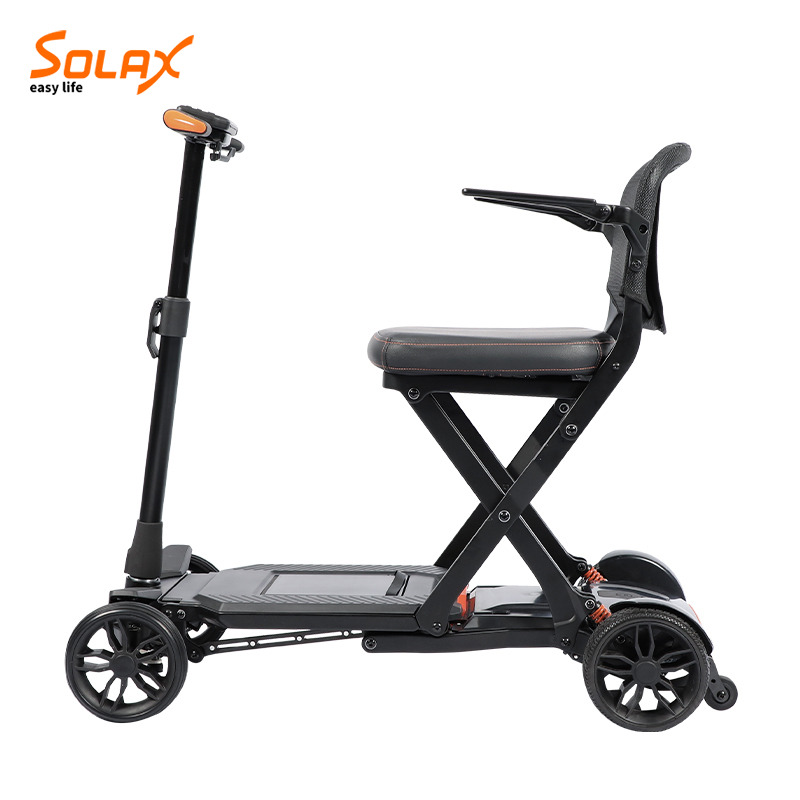
Many buyers encounter severe issues after purchasing sub-$500 clone brands online. User forums remain flooded regarding dangerous structural "flex" in these budget frames. Poorly engineered carbon fiber produces alarming cracking sounds under loads exceeding 200 lbs. Legitimate carbon fiber involves complex layers bonded by aerospace resins. Clones often use cheap fiberglass wrapped in a single cosmetic carbon layer.
The primary structural failure point involves poor hardware integration. Cheap models feature steel hardware passing directly through unreinforced carbon fiber. Over time, constant vibrations from the road stress these connection points. The surrounding carbon layers and plastic fairings eventually fray and splinter. This mechanical fatigue causes catastrophic frame failure during active use.
You must apply a strict evaluation lens when shortlisting models. Always verify the maximum weight capacity through verified testing documentation. Look for limits strictly tested between 270 and 300 lbs. Check for reinforced joints using high-grade aluminum inserts at high-stress folding points. A robust portable electric scooter should handle its maximum capacity without chassis distortion.
Assuming all carbon weaves offer the same tensile strength.
Ignoring audible creaking sounds during the initial test ride.
Purchasing models lacking metal-reinforced folding hinges.
Trusting weight capacities lacking third-party verification.
Choosing the right scooter requires looking well beyond the basic spec sheet. You need to evaluate how the device seamlessly integrates into your daily routine. We must examine folding mechanisms first. The difference between a daily driver and a garage paperweight often comes down to folding speed.
Consider manual quick-release systems versus an auto folding mobility scooter. Manual carbon fiber models often fold in mere seconds using simple levers. You can then tow them by the tiller like a standard suitcase. They typically feature far fewer electronic failure points than fully automatic folding mechanisms. Simplicity heavily breeds long-term reliability.
Next, assess the security and onboard technology features. Value-add technologies drastically improve daily usability and peace of mind. NFC keyless ignition provides crucial anti-theft protection during global travel or hotel stays. Digital consoles accurately display real-time battery voltage rather than vague battery bars. This exact data helps you avoid unexpected power losses far from home.
Finally, prioritize braking technology above top speed metrics. A truly reliable folding mobility scooter must feature a dedicated electromagnetic braking system. This system automatically stops the device the moment you release the throttle. Audible reverse alerts are equally critical for spatial awareness. They ensure you can safely maneuver backward in tight indoor environments like supermarkets.
Tech Evaluation Summary Chart | ||
Feature | Primary Benefit | Importance Level |
|---|---|---|
NFC Keyless Ignition | Prevents unauthorized use during travel | High |
Electromagnetic Brakes | Zero-roll automatic stopping | Critical |
Digital Voltage Console | Precise battery lifecycle tracking | Medium |
Reverse Safety Alerts | Prevents blind-spot collisions indoors | High |
Manufacturers often recklessly slap "all-terrain" labels on their lightweight products. You must manage your terrain expectations realistically. Lightweight carbon fiber scooters usually feature extremely low ground clearance. Expect around 1.5 inches at the lowest point near the motor housing. This geometry keeps the center of gravity safe but limits off-road potential.
They utilize solid or perforated rubber tires to avoid flat flats. These specific designs excel on hard indoor surfaces, solid pavement, dry grass, and ADA-approved ramps. They are simply not engineered for extreme off-roading, thick mud, or loose gravel. Taking them off smooth paths risks severe motor damage and voids warranties.
Motor power requires careful, honest evaluation. Heavier adults exceeding 250 lbs must assess motor wattage directly. A standard 250W motor will likely struggle and overheat on steep inclines. Premium models often feature dual motors or a dedicated 500W setup. These upgraded configurations provide the necessary torque for neighborhood hills without burning out the electrical controller.
Maneuverability completely defines your indoor user experience. Look carefully for specifications detailing a zero or very tight turning radius. This measurement dictates how well the scooter performs inside tight spaces. Cruise cabins, crowded living rooms, and narrow grocery aisles demand exceptional agility. A heavy turning radius forces frustrating multi-point turns.
Stick to ADA-compliant ramps (typically a 1:12 slope ratio).
Avoid deep puddles to protect low-mounted motor housings.
Approach raised thresholds straight-on, never at an angle.
Monitor tire tread wear monthly to maintain optimal grip.
Purchasing unverified scooters online introduces the terrifying "bricked scooter" risk. Off-brand products often provide absolute zero aftermarket parts availability. A snapped tiller handle or a dead proprietary battery can render a cheap scooter completely useless. You cannot easily fix a clone brand once the overseas seller vanishes.
You should apply strict shortlisting logic to avoid this expensive trap. Prioritize brands operating verified domestic warehouses. Look for established research and development backing clearly outlined on their corporate pages. They must provide highly accessible customer support for common replacement parts. You will eventually need new tires, seat cushions, and replacement batteries.
Before completing any major purchase, take a few practical steps. These simple checks prevent massive buyer's remorse upon delivery.
Measure Trunk Dimensions: Physically measure your vehicle's cargo space. Compare these numbers against the scooter's exact folded dimensions.
Verify Airline Policies: Check your preferred airline’s specific mobility battery rules. The FAA generally caps lithium-ion batteries at 300Wh for mobility aids.
Check Disassembly Requirements: Verify if the unit requires partial base disassembly. You might need to remove the seat or split the chassis to achieve the advertised lifting weight.
Review Warranty Terms: Look specifically for warranties covering the carbon fiber frame for at least two to three years.
Taking these methodical steps guarantees you purchase a machine capable of supporting your lifestyle for years. Genuine aftermarket support transforms a frustrating breakdown into a minor inconvenience.
Upgrading to a carbon fiber electric scooter represents a profound investment in your personal independence. It immediately unlocks spontaneous travel flexibility previously denied by heavy machinery. The initial upfront cost is predictably higher than traditional aluminum options. However, eliminating physical lifting strain fully justifies this premium. Including airline-compliant battery technology makes spontaneous global travel accessible and entirely stress-free.
We strongly recommend avoiding bargain-basement clones boasting questionable structural integrity. These cheap alternatives actively threaten your physical safety under heavy operational loads. Prioritize proven models integrating modern NFC security and responsive electromagnetic braking. Always verify a true 300 lb weight capacity through trusted manufacturer documentation. Taking these careful steps ensures safe, reliable, and incredibly lightweight daily use.
A: Yes, provided they are equipped with an airline-compliant lithium-ion battery. Most aviation authorities restrict mobility batteries to 300Wh (usually around 12Ah). Always contact your specific airline at least 48 hours before flying. You must confirm their exact carriage requirements and declare your mobility device to avoid gate delays.
A: The frame alone usually weighs between 27 and 35 lbs. However, buyers must absolutely account for the battery and the removable seat. Adding these essential components can bring the total lifting weight closer to 40 lbs, depending strictly on your specific model and configuration.
A: It depends heavily on the rider's weight and the motor's total wattage. They excel on standard ADA-compliant ramps (typically up to a 5-degree incline). However, steep residential hills require a model specifically upgraded with a 500W motor or a dual-braking system to handle the heavy load safely.


